COGNITIVE HEALTH PROGRAMS
The ones who protected their cognition didn’t have better genes — they just started.
A systematic, evidence-based process for understanding your cognitive risks — and acting on them, guided by your cognitive coach.
For adults 35–75 ready to take that first step.
IS THIS YOU?
You've started asking questions most people aren't asking yet.
Perhaps you've just discovered you carry the APoE4 gene — and with that knowledge comes both clarity and questions. Or Alzheimer's has touched your family and you've decided that awareness without action is no longer enough.
Maybe the sharpness you've always relied on feels a little different. Not dramatically — but you notice it. Words that used to come easily, a name on the tip of your tongue. You're functioning well, but something has shifted and you want to understand why.
Or you've received a Mild Cognitive Impairment (MCI) diagnosis and found yourself with very little guidance on what to do next. You're not willing to take a wait-and-see approach.
Perhaps you're simply someone who believes that investing in your cognitive health now — at 45, 55, or 70 — is one of the most important things you can do for your future self.
You may have heard that lifestyle can make a meaningful difference to cognitive health. But knowing that and knowing where to start are two very different things.
Whether you're newly aware of your genetic risk, or taking a proactive approach to your cognitive future — the process is the same. Systematic, data-driven, personalised, and grounded in evidence.
WHO I HELP
Which of these sounds like you?
Whether you're preventing, optimising or recovering — the process is the same. Understand your risk. Take supported action. Address what's modifiable.
YOUR COGNITIVE FUTURE
Picture Yourself.
Quicker to process. Clearer in your thinking. And with the quiet confidence that comes from knowing you're doing everything you can.
Maybe you're not thinking decades ahead. Maybe you simply want to feel more like yourself — sharper, more present, more like yourself again.
Whether you carry the APOE4 gene, want to optimise your cognitive performance, or are navigating an MCI diagnosis, one thing is true:
Your cognitive health is your most valuable asset. It underpins your work, your relationships, your quality of life.
Protecting it with the same rigour you'd give anything else that matters isn't overcautious — it's smart strategy. You don't need to have all the answers. You just need to start — because in cognitive health, timing is everything.
Ready to take control of
your cognitive health?
Book a complimentary Discovery Call. We'll explore your start point, your questions, and whether the approach is right for you.
MEET RACHEL
This isn't just what I do. It's what I live.
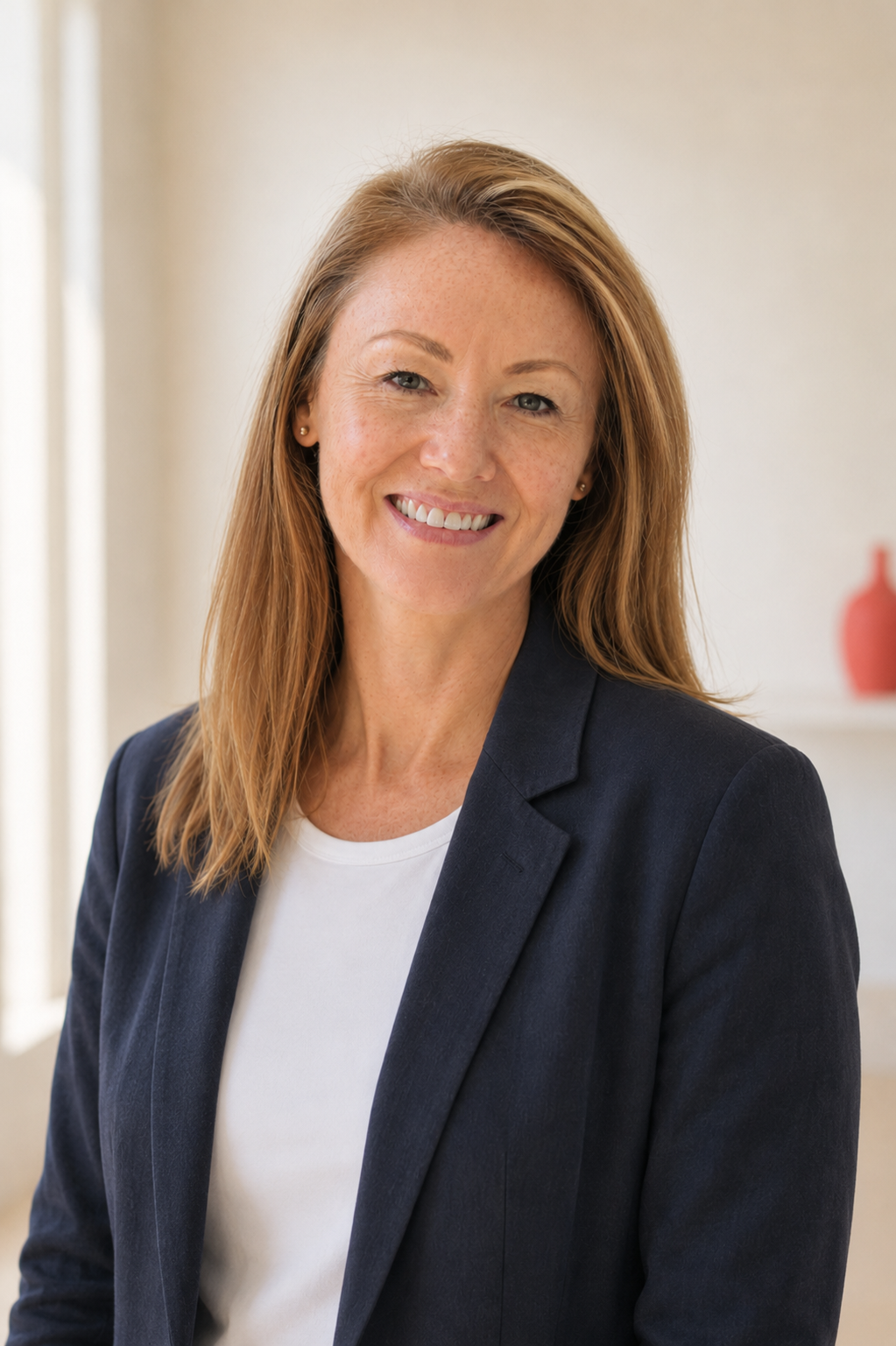
I'm Rachel — a certified cognitive health coach, ReCODE Coach, APoE4 carrier, and someone who has walked — and is still walking — this path myself.
When I discovered my own genetic risk and with a family history of Alzheimer's, I knew I had to get under the bonnet of a deeply complex topic.
At its core, cognition is a series of biochemical processes — and therefore the goal is to make all of those processes work as well as they possibly can — by changing to cognitive biochemical process inputs, it changes the process outcomes - memory, executive function and processing speed.
My cognition in my younger years wasn't where I wanted it to be — at times I struggled to find words, or my processing was slowed. I navigated my way through it, making more than 50 evidence-based lifestyle changes, and now regularly track key biomarkers and am always optimising my daily routine to stay ahead. Today, I feel sharp and in control.
THE APPROACH
A process built around you.
Every Cognevity client moves through the same evidence-based process — starting with data that tells the real story of your cognitive health, and supported implementation to help you act on it.
WHAT PEOPLE SAY
Client Experiences
Ready to take control of
your cognitive health?
Book a complimentary Discovery Call. We'll explore your start point, your questions, and whether the approach is right for you.
Frequently Asked Questions
-
What is cognitive function?
Cognitive function is a dynamic system of interconnected mental processes—including memory, attention, processing speed, and executive function—that work together to help us think, learn, solve problems, and navigate daily life. Rather than a fixed state, it's constantly adapting and responding to our experiences, environment, and lifestyle choices.
-
Cognitive decline is a gradual reduction in mental functions such as memory, attention, executive function and decision-making. Early signs might include difficulty recalling names or appointments, trouble with physical control, or challenges with everyday tasks.
Recognising changes early gives you the opportunity to respond proactively. With evidence-based strategies and appropriate support, you can take steps to protect and maintain your cognitive health over time.
-
What is Dementia? What is Alzheimer's Disease?
Dementia is an umbrella term for a group of symptoms that affect memory, thinking, and the ability to perform everyday activities. It's not a single disease, but rather a syndrome caused by various conditions that damage the brain. Common types of dementia include Alzheimer's disease, vascular dementia, Lewy body dementia, and frontotemporal dementia. In Australia, an estimated 421,000 people are living with dementia, and this number is expected to increase significantly in coming decades.
More descriptions of the different types of dementia can be found at Dementia Australia.
Alzheimer's disease is a type of dementia first described by Dr. Alois Alzheimer in 1906. It's the most common form of dementia, accounting for 60–70% of cases worldwide.
While Alzheimer's becomes more common with age, symptoms can appear before 65 years—known as early-onset Alzheimer's. Research shows the biological changes that drive Alzheimer's often begin many years before anything becomes noticeable.
Alzheimer's is a progressive, multifactorial condition shaped by many interconnected areas of health, including inflammation, metabolism, hormones, sleep, stress, nutrient status, and environmental factors. Because these influences differ from person to person, Alzheimer's can present differently for everyone—with varying patterns, timelines, and early signs.
-
ApoE4 (apolipoprotein E4) is a genetic variant that influences how your brain processes fats (lipids) and is the strongest known genetic risk factor for late-onset Alzheimer's disease.
Understanding the gene:
Everyone inherits two copies of the APoE gene—one from each parent. The gene comes in three main variants: ApoE2 (protective), ApoE3 (neutral, most common), and ApoE4 (increases risk). Your combination of these variants affects your baseline risk, but it doesn't determine your destiny.
Approximately 25% of the general population carries at least one copy of ApoE4, and around 2-3% carry two copies. Among people who develop Alzheimer's disease, an estimated 40-50% carry at least one ApoE4 variant.
The good news? ApoE4 is epigenetic—which means its expression can be influenced and managed through lifestyle, environment, and targeted interventions, especially those that support healthy lipid metabolism.
-
What is the Bredesen Protocol®?
The Bredesen Protocol® is a personalised, science-based approach to cognitive health developed by Dr. Dale Bredesen and delivered through Apollo Health. Unlike conventional approaches that focus on single interventions, the Bredesen Protocol® addresses the multiple underlying factors that contribute to cognitive decline—including inflammation, metabolism, hormonal balance, nutrient deficiencies, toxin exposure, and vascular health.
The protocol uses comprehensive testing to identify each person's unique risk factors and root causes, then creates a targeted, multi-modal plan to address them. This approach, known as ReCODE (Reversal of Cognitive Decline), has shown great promise in early intervention and prevention of cognitive decline.
-
Cognevity is informed by the Bredesen Protocol® and offers the official programme as a qualified ReCODE Coach through Apollo Health. If you are a member of Apollo Health, Cognevity will navigate the platform with you and create your personalised ReCODE report, guiding you through every step of implementation.
At the same time, Cognevity draws on insights from other leading experts in the field of cognitive health, integrating the latest evidence on lifestyle, nutrition, environment, and personalised strategies. This ensures every client receives a comprehensive, proactive, and evidence-informed pathway to protecting and strengthening their cognitive health.
-
What is a Cognoscopy?
A Cognoscopy is a term coined by Dr. Dale Bredesen to describe a structured assessment of your cognitive health. It brings together cognitive testing, key biomarkers, and your lifestyle context to help you understand what's happening in your brain and body long before symptoms appear.
The purpose isn't diagnosis—it's clarity. A Cognoscopy helps identify patterns, early changes, and areas that may benefit from support. Think of it as a comprehensive health check specifically designed to assess your cognitive risk profile and establish a baseline for ongoing brain health.
How it works within Cognevity programs:
In the Cognevity programs, Cognevity navigates you through completing your Cognoscopy with your GP or the integrated GP as part of establishing your baseline and understanding your unique risk profile. This gives you a clear starting point and helps you see which areas of your health are most relevant to your long-term cognitive wellbeing.
From there, you receive structured guidance to help you make informed, achievable decisions alongside your GP, with ongoing support to implement personalised strategies based on your results.
-
A health coach is a trained professional who helps you make meaningful, sustainable changes in your daily life. They don't diagnose or treat; instead, they focus on behaviour change, clarity, and support—helping you turn intentions into consistent action. A health coach works with your goals, your motivation, and your real-world context so you can make progress in a way that feels achievable and personalised.
Checking credentials matters:
Because the term "functional medicine health coach" is sometimes used loosely, it's important to check a coach's training and credentials. A properly trained functional medicine health coach will have completed an accredited program such as the Functional Medicine Coaching Academy (FMCA), which is internationally recognised for its standards in coaching skills, behaviour change, and functional-medicine-aligned education.
In Australia and New Zealand, it's also helpful to check whether a coach is a member of HCANZA (Health Coaches Australia & New Zealand Association). HCANZA sets the professional standards for health coaching in this region, ensuring coaches meet recognised training, ethics, and practice requirements.
Choosing a coach with these credentials helps ensure you're working with someone who is properly trained, professionally recognised, and operating within a clear scope of practice—especially when your focus is long-term cognitive health.
-
Why does prevention matter?
Cognitive decline doesn't start when symptoms appear. It begins quietly, in the background, with early changes such as lipid membrane dysfunction and oxidative stress, followed by the accumulation of amyloid plaques and tau tangles, eventually leading to neurodegeneration and loss of cholinergic function. These processes can unfold over decades before any noticeable symptoms emerge.
A prevention-focused approach helps you understand your personal risk factors, address changes early while they're still modifiable, strengthen the foundations of brain health, and protect your long-term quality of life.
Get in touch
If you’d like to explore if I can help, would like to know more or have any questions — send a message.
This website provides general information for educational purposes only. It is not medical advice and does not replace the care of your GP or healthcare team. Cognevity provides cognitive health education and coaching only. For full details, please refer to our Terms and Conditions and Privacy Policy.
© 2025 Cognevity Pty Ltd. All rights reserved. Content may not be reproduced or distributed without written permission.
Cognevity® is a registered trademark of Cognevity Pty Ltd
ABN 25 675 131 665